You’re thinking about getting a rollator walker — or maybe you already have one — and you’re wondering what other folks are saying about them. While most users appreciate the support and freedom rollators provide, no product’s perfect. Some stuff just bugs people.
We read through a bunch of rollator walker reviews and here’s what people tend to gripe about. Whether you’re shopping for yourself, a parent, or someone recovering from surgery, knowing these heads-ups might save you from some headaches down the road.
1. Too Bulky for Small Spaces
Let’s kick things off with a big one: size. A lot of users mention that their rollator is just… kind of a beast indoors.
- “It doesn’t fit through my bathroom door.”
- “Feels like I’m pushing a shopping cart in a hallway.”
- “Turning in my small kitchen is nearly impossible.”
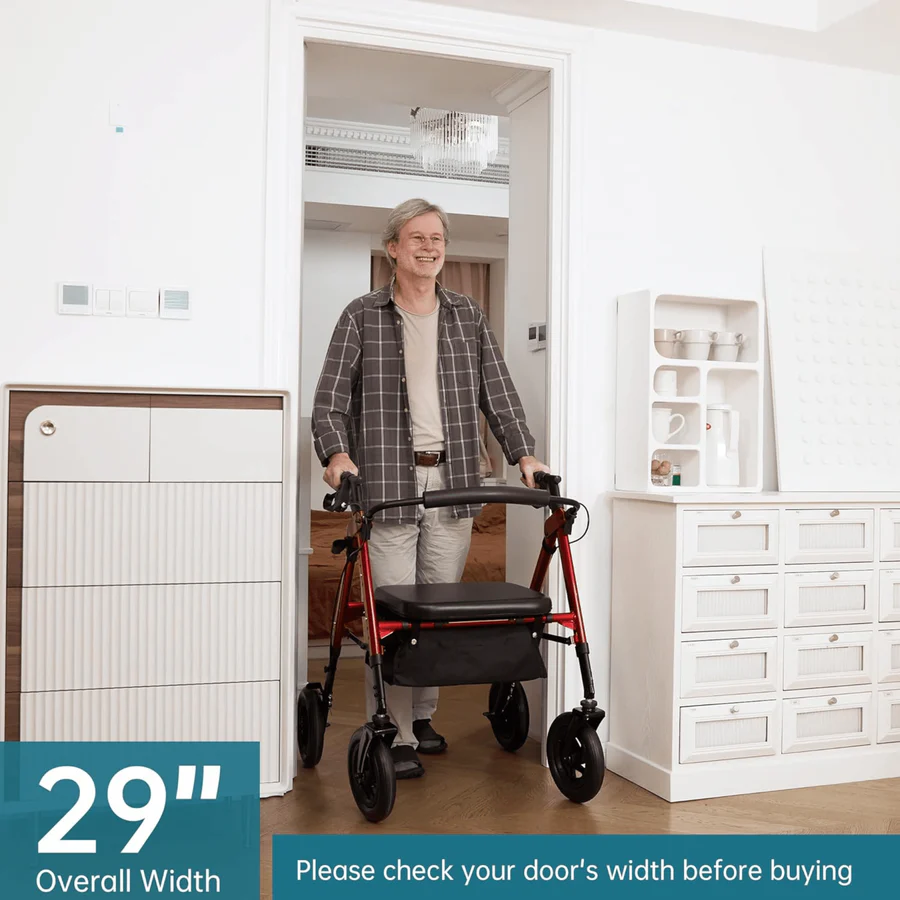
Rollators can feel wide, especially the rollators with big wheels or extra storage. If you’re living in a compact space — say an apartment, RV, or older home with narrow doorways — that bulk becomes a real issue fast.

Pro tip: Always check the width before you buy, especially if tight turns or door frames are part of your daily route.
2. Heavier Than Expected
Another common complaint? Weight. Some rollators look sleek and lightweight in pictures… but once they arrive, folks are surprised by how heavy they really are.
- “Lifting it into my car trunk is a workout.”
- “I can’t fold and carry it by myself.”
- “Too heavy for my mom to use outside the house.”
Many standard rollators weigh between 15 to 20 pounds, which doesn’t sound like much until you’re dealing with joint pain, fatigue, or limited strength.
Lightweight rollators exist, but they’re not all created the same. Aluminum is better than steel if weight is a concern.
3. Brakes Can Be Tricky
Brakes are supposed to keep you safe, right? But reviews show a mixed bag.
Some users complain about brakes being:
- Too tight (hard to squeeze if you have arthritis)
- Too loose (not stopping well on slopes)
- Hard to lock or unlock

And in some cases? They just stop working after a few months, especially if you’re using the rollator outdoors or in rainy conditions.
If safety is a top priority — and let’s be honest, it should be — this one matters. Look for a walker with solid, responsive brakes and test them regularly.
4. Seat’s Not Comfortable (or Not What They Expected)
The built-in seat is a big reason people go for rollator walkers over standard ones. But it’s not all sunshine and cushioning.
Common complaints:
- “Too small for me to sit comfortably.”
- “Feels like sitting on a metal plank.”
- “No backrest — or it’s just a flimsy strap.”
People over 6 feet tall or with wider hips tend to feel cramped. Others mention the padding being so thin, it’s basically cosmetic.
Some folks throw a cushion on top and call it a day. Others swap models altogether. If sitting often is part of your routine, definitely double-check seat dimensions and padding before hitting that “Buy” button.
5. Difficult to Fold and Transport
Despite being labeled as “foldable,” not all rollators fold the same way — and some are just plain awkward.
- “I can’t figure out how to collapse it.”
- “Folding it doesn’t actually make it that much smaller.”
- “It won’t stay folded when I’m lifting it into the car.”
Frustration like this shows up a lot in reviews, especially from folks who need to travel with their rollator or store it daily.
Some newer models fold front-to-back (like closing a book), while others fold side-to-side. If portability is a top priority, look for a compact folding design and check the user manual (or better yet, a demo video) before committing.
6. Poor Wheel Quality
Rollator walkers are supposed to go with you — indoors, outdoors, down sidewalks, across driveways, maybe even over grass. But not all wheels are up for the challenge.
Reviewers mention:
- Plastic wheels that wear down fast
- Wheels that rattle or wobble
- Trouble rolling over gravel or uneven ground
If your rollator starts bumping and shaking like a shopping cart with a wonky wheel, you’re not gonna enjoy using it. Larger rubber wheels (usually 8” or more) tend to handle mixed terrain better. Small plastic ones? Not so much.
7. Handle Height Isn’t Quite Right
Even when a rollator claims to be “adjustable,” users still complain about handle height.
- “Too short for my 6’3” husband.”
- “Even on the lowest setting, it’s too high for me.”
- “Adjustments are a pain and don’t stay put.”
A poorly adjusted walker can cause shoulder pain, bad posture, or awkward walking. Always check the minimum and maximum height range. And if you’re in between sizes? You might have to test a few before finding your sweet spot.
8. Storage Basket or Bag Isn’t Practical
Storage is a nice perk — rollator baskets, under-seat pouches, or removable bags — but they don’t always live up to the hype.
- “The basket falls off when I fold it.”
- “The storage area is too small for my purse.”
- “Zipper broke after two weeks.”
People rely on that space to carry essentials: medication, snacks, a book, a phone. If the storage isn’t sturdy or accessible, that’s a real inconvenience.
9. Assembly Problems or Missing Parts
Even the best-rated rollator can show up with issues right out of the box.
Some users report:
- “Missing screws or tools.”
- “Instructions were confusing.”
- “Parts didn’t line up properly.”
Not everyone has the time (or patience) to deal with complicated assembly. If you’re ordering online, check what reviewers say about putting it together. Some brands include clear guides — others, not so much.
10. Feels Medical or Unattractive
This one’s more personal, but it shows up often: how it looks.
- “It screams ‘I’m old and fragile’.”
- “Wish it came in better colors.”
- “Looks like hospital equipment.”
No one wants to feel like they’re pushing a piece of hospital furniture down the street. Some brands are starting to lean into more stylish designs and colors, but the options are still limited.
Rollator walkers help a ton of people stay mobile, confident, and independent. But they’re not perfect — and these common complaints are worth keeping in mind if you’re in the market for one.
Here’s a quick cheat sheet:
- Measure your doorways if space is tight
- Check the weight if lifting is hard for you
- Test the brakes before relying on them
- Don’t assume all seats are comfy — check the size
- Watch some real-user videos before you buy
A good rollator should make life easier, not more frustrating. And the right one is out there — just gotta dodge a few lemons first.